
Critical Systems Control ™ for Engine and Transmission Safety
Modern industrial vehicles work hard every shift. Heat, load, and continuous operation put stress on critical components long before visible failure occurs.
Critical Systems Control™ (CSC™) is designed to monitor those risks in real time and help operators and managers protect engines and transmissions before damage escalates.
Built for demanding environments, CSC™ supports safety-critical control systems that prioritize uptime, operator awareness, and long-term vehicle health.
Longer Vehicle Life Span
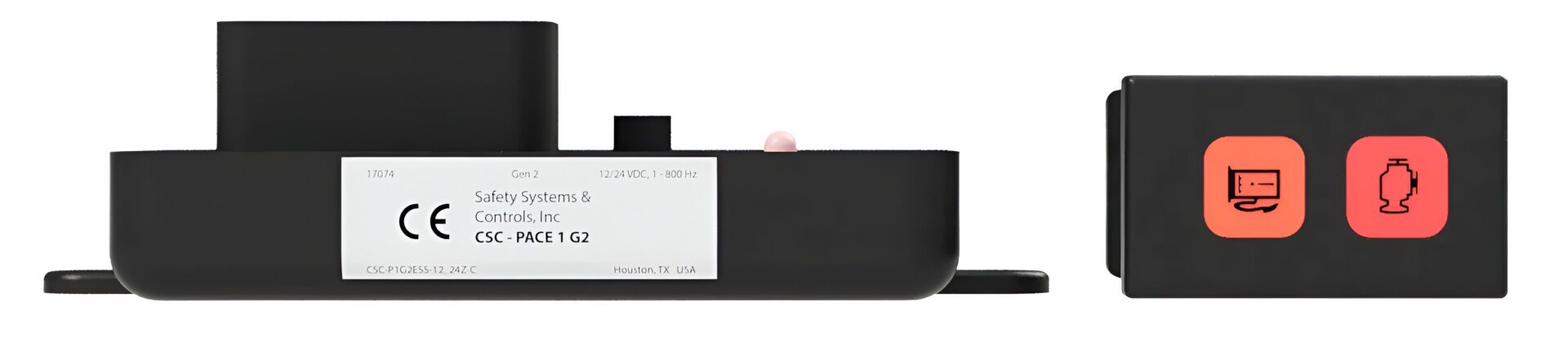
CSC™ constantly monitors critical systems on the vehicle installed. It warns the operator about oil pressure, transmission temperature, engine temperature, fuel level, etc. and can be programmed to turn off the vehicle after reaching certain thresholds. Overall, the system prevents vehicle abuse and promotes a longer lifespan.
This proactive approach reduces:
- Premature engine wear
- Transmission overheating
- Costly unplanned downtime
- Operator-related vehicle abuse
PACE-ONE™ Included
Our CSC™ system is built on the PACE-ONE™ G2 speed limiter, which can limit the vehicle's top speed based on programmed values. The integration of speed control with safety-critical control systems creates a layered approach to vehicle protection rather than relying on a single safeguard.
Click here to learn more about the PACE-ONE™ Speed Limiter.
No Shut-Off Option
The CSC™ can be programmed to only warn about critical system status without turning off the vehicle. This is important for diesel engines to prevent damage.This option allows the engine temperature sensor to alert operators in real-time while keeping the engine running for a safe cool-down.
Why Transmission Temperature Sensors Are Essential for Heavy Equipment
Heat is one of the most common causes of transmission failure in forklifts and industrial vehicles. A transmission temperature sensor continuously tracks heat levels inside the transmission, allowing operators and systems to respond before oil breakdown or component damage occurs.
In high-load environments, monitoring transmission oil temperature sensor data helps:
- Prevent overheating during long shifts
- Reduce clutch and gear wear
- Avoid costly unplanned downtime
- Maintain consistent performance under load
By feeding accurate temperature data into safety critical control systems, facilities gain early intervention instead of reactive repairs.
How Safety-Critical Control Systems Prevent Equipment Failure
Modern fleets rely on more than warning lights. Safety critical control systems actively process data from sensors such as the transmission oil temperature sensor and engine temperature sensor to determine when conditions are unsafe.
CSC™ doesn’t just notify the operator. It can:
- Trigger alarms when thresholds are exceeded
- Limit speed to reduce thermal stress
- Initiate controlled shutdowns when enabled
- Log data for diagnostics and maintenance planning
This proactive control reduces the chance of catastrophic failure and supports safer, more predictable vehicle operation.
CSC™ can be integrated into new vehicles or added to existing fleets. Transmission temperature sensor inputs and engine monitoring channels are compatible with a wide range of industrial equipment, making fleet-wide deployment practical without major modifications.
Combined with programmable logic through the μCal™ programmer, CSC™ adapts to each vehicle’s operating profile.
Frequently Asked Questions
Do You Have the Programmer?
Click the button to get more information on our μCal™ programmer. With this device you can program any of our programmable products.