
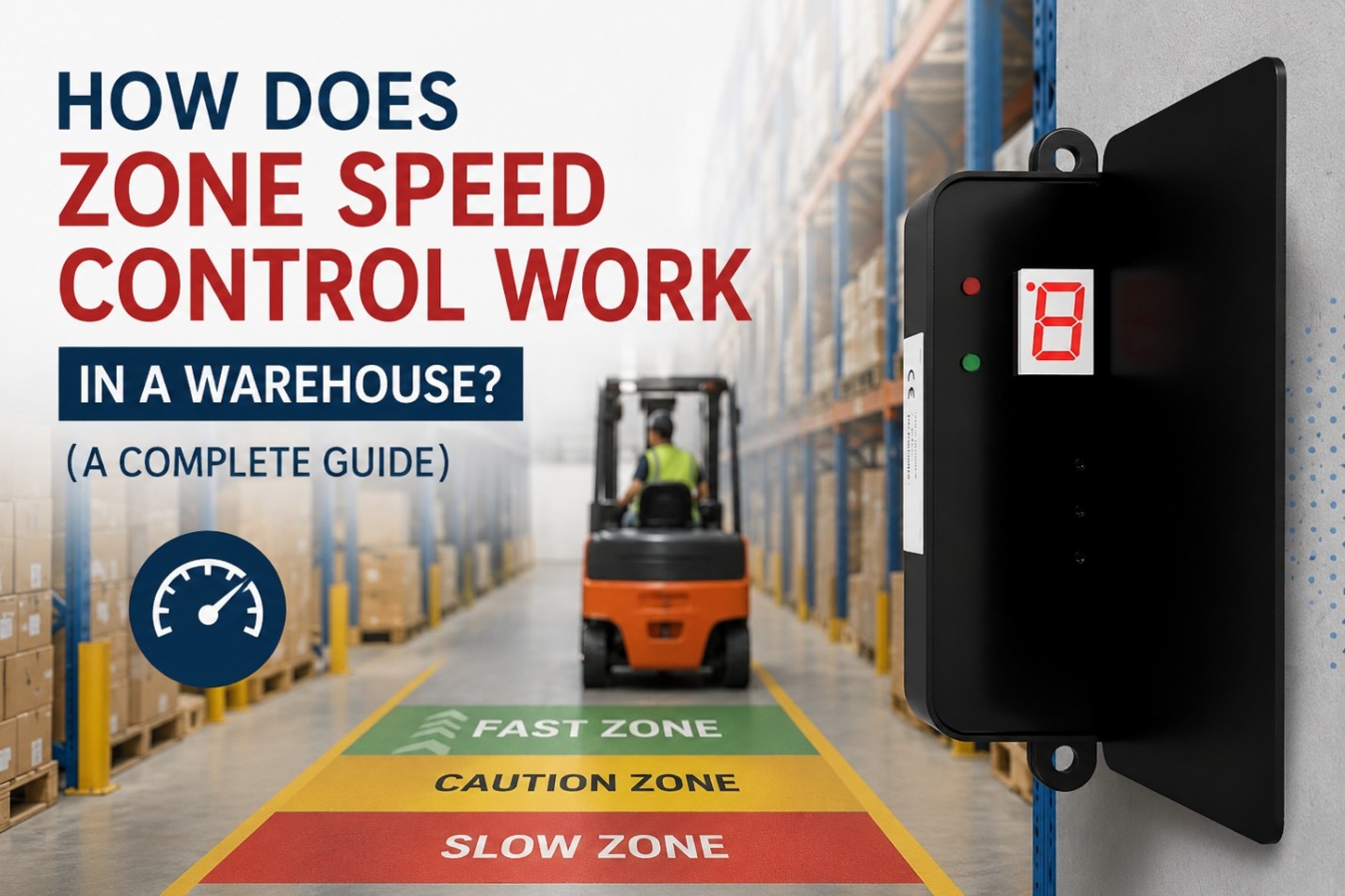
How Does Zone Speed Control Work in a Warehouse? (A Complete Guide)
Warehouses are busy environments where forklifts, industrial vehicles, equipment, and pedestrians often work within the same space. Without proper speed management, even a small mistake can lead to injuries, damaged inventory, or costly downtime. Many facility managers ask how does zone speed control works because they want safer operations without reducing productivity.
Zone-based speed management offers a practical solution by automatically controlling vehicle speed in different work areas. This guide explains how the system operates, why it matters, and how modern industrial safety solutions improve both workplace safety and operational efficiency.
Understanding Zone Speed Control
Zone speed control is a safety method that automatically adjusts the speed of industrial vehicles when they enter predefined areas inside a warehouse. Instead of relying only on operators to slow down, the system applies speed limits based on the vehicle’s location.
These controlled zones are created in areas where lower speeds improve safety, including:
- Pedestrian crossings
- Loading docks
- Narrow warehouse aisles
- Packing stations
- High-traffic intersections
- Material storage zones
The goal is to reduce accidents while allowing vehicles to travel at suitable speeds in lower-risk areas.
How Does Zone Speed Control Work?
Many warehouse managers wonder how does zone speed control works in day-to-day operations. The process is straightforward and focuses on automatic speed management instead of depending entirely on operator decisions.
The system generally follows these steps:
- Predefined safety zones are established throughout the warehouse.
- Industrial vehicles detect when they enter a specific zone.
- The control system automatically applies the assigned speed limit.
- Once the vehicle leaves the zone, normal operating speed can resume if permitted.
- The process repeats every time the vehicle enters another controlled area.
This automatic operation helps maintain consistent safety standards throughout the facility while reducing the chances of human error.
Why Warehouses Need Speed Control Systems
Warehouse traffic constantly changes during daily operations. Workers move inventory, forklifts transport heavy loads, and loading areas become congested during busy shifts.
Without proper speed management, facilities may face:
- Increased collision risks
- Damage to products and equipment
- Higher maintenance costs
- Unsafe interactions between vehicles and pedestrians
- Reduced operational confidence
A properly designed speed limiter system helps maintain safe driving speeds while allowing operations to continue smoothly. Rather than interrupting workflow, the system supports controlled vehicle movement where it matters most.
Where Zone Speed Control Is Most Effective
Not every warehouse area requires the same speed limit. Different workspaces have different levels of risk.
| Warehouse Area | Purpose of Speed Control |
| Loading docks | Reduce collision risks during loading activities |
| Pedestrian crossings | Protect workers walking through vehicle routes |
| Narrow aisles | Improve maneuverability around shelving |
| Packing stations | Support safer movement near employees |
| High-traffic intersections | Reduce sudden impacts between vehicles |
Applying different speed limits to different areas creates a balanced approach between safety and productivity.
Key Components That Support Zone Speed Control
A complete zone control solution combines several technologies that work together to manage vehicle movement safely.
Important components often include:
- Zone-based vehicle controls
- Speed management controls
- Operator safety controls
- Detection technologies
- Vehicle communication systems
Safety Systems & Controls develops industrial safety solutions that integrate with Camera AI, Ultra-Wide-Band, radar, and other sensing technologies. Instead of providing warning alerts alone, these integrated systems actively manage vehicle speed and reinforce safe operating behavior.
The Role of a Speed Limiter System
A speed limiter system acts as the control mechanism that enforces safe vehicle speeds. Unlike manual reminders or warning signs, the system automatically applies preset speed limits whenever required.
Its primary functions include:
- Preventing excessive vehicle speeds
- Supporting consistent operator behavior
- Reducing dependence on manual supervision
- Improving safety compliance
- Helping minimize impact-related damage
Because speed adjustments happen automatically, operators can remain focused on transporting materials safely without constantly monitoring changing speed requirements.
Benefits of Zone Speed Control for Warehouse Operations
Zone speed control improves more than workplace safety. It also supports better operational performance across the facility.
Some important benefits include:
- Reduced accident risks
- Lower equipment repair costs
- Better protection for inventory
- Improved pedestrian safety
- More predictable vehicle movement
- Increased operator confidence
- Better overall workplace organization
By controlling speed only where necessary, facilities maintain operational efficiency while protecting employees and valuable equipment.
Supporting Safer Industrial Operations
Since 1994, Safety Systems & Controls has partnered with OEMs, dealers, and industrial operators to develop industrial safety solutions that strengthen workplace safety and improve productivity. Its equipment operates in warehouses, manufacturing plants, loading docks, and construction environments where dependable performance is essential.
Its vehicle safety products include:
- Zone-able speed limiters
- Mast limiters
- Pedestrian-aware control systems
- Idle limiters
- Shift inhibitors
- Engine shutdown systems
Together, these solutions support controlled vehicle operation, safe drivability, and long-term operational performance across demanding industrial environments.
More Than Speed Control
Modern industrial safety systems are designed to support complete operational safety rather than focusing on speed alone.
Additional safety functions may include:
- Managing idle time to reduce unnecessary fuel or energy use
- Controlling vehicle traction during operation
- Preventing unsafe shift changes
- Supporting compliance with workplace safety procedures
- Reducing high-impact vehicle damage
These integrated safety measures help organizations improve productivity while maintaining safer working conditions throughout the facility.
Choosing an Effective Warehouse Safety Approach
When evaluating warehouse safety improvements, organizations should look beyond warning devices alone. Active control systems can provide greater consistency because they automatically enforce safe operating behavior.
Important considerations include:
- Ability to create multiple speed zones
- Reliable vehicle speed management
- Integration with sensing technologies
- Support for different industrial environments
- Long-term operational reliability
Many organizations exploring how does zone speed control works discover that automated speed management provides a practical balance between workplace safety and operational efficiency. When paired with a dependable speed limiter system, facilities can better protect employees, equipment, and inventory without disrupting daily operations.
Conclusion
Understanding how does zone speed control works helps warehouse operators make informed decisions about improving workplace safety. Automatic speed management reduces risks in busy areas while allowing efficient vehicle movement throughout the facility. Combined with a reliable speed limiter system, these solutions support consistent safety standards, reduce unnecessary damage, and improve overall operational performance.
Safety Systems & Controls continues to develop industrial safety solutions that help warehouses, manufacturing facilities, loading docks, and other demanding environments create safer, more controlled workplaces where people and productivity can succeed together.
