
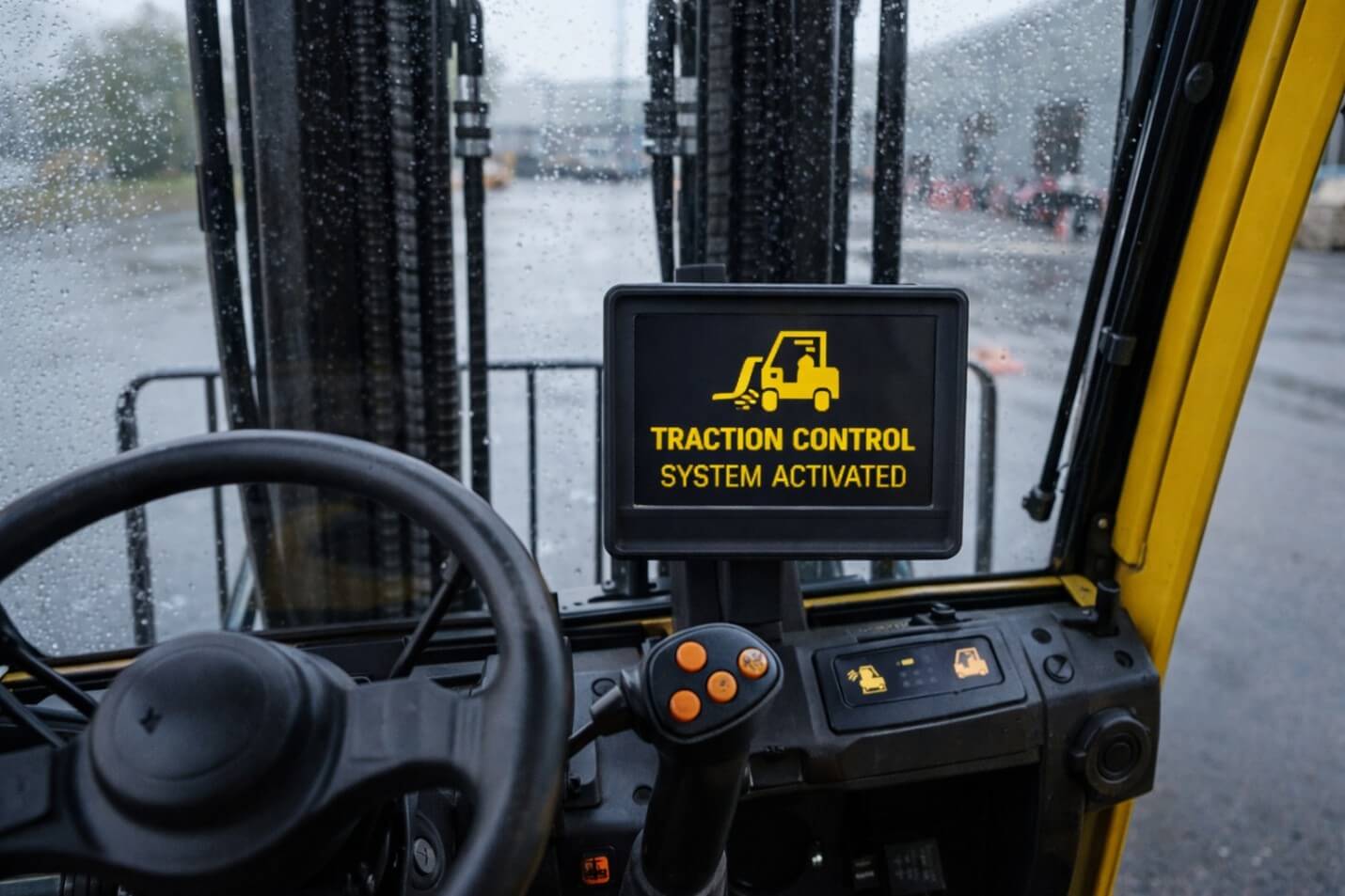
Traction Control System: The Real Reason Your Wheels Spin but You Don’t Move
Have you ever hit the gas, watched the wheels spin, and thought, “Why am I going nowhere right now?” It feels like the vehicle ignores you. In reality, your tires lose grip, torque overwhelms the surface, and the wheels spin faster than the vehicle can travel. That gap between wheel speed and real movement is slip, and it shows up on wet paint, dusty concrete, gravel, snow, or a steep dock plate.
A traction control system steps in to limit that slip by cutting torque or braking a spinning wheel, so the tire can bite again and you can move safely.
What’s Really Happening When Your Wheels Spin but the Vehicle Doesn’t Move
Wheel spin starts when torque beats traction. Your tires can only transmit so much force into the surface. When the pavement gets wet, the warehouse floor picks up dust, or the ground turns loose, the tire loses its bite. The contact patch starts slipping instead of gripping. Slip can show up in two ugly ways:
- Excessive slip on acceleration: the drive wheels spin faster than the vehicle actually travels.
- Load transfer problems: weight shifts away from the drive tires, so they lose pressure and grip.
This is why you can hear the engine, see RPM climb, and still feel stuck. You do not “lack power.” You lack friction. Tires need normal force, a surface with texture, and a compound that can interlock with that texture. If any one of those drops, spin shows up fast.
In industrial settings, the problem gets sharper. A tow tractor pulling weight, a forklift nudging a pallet, or a yard vehicle climbing a dock plate all creates sudden torque spikes. If an operator feathers the inching pedal at high RPM, wheel slip can appear in a blink and the vehicle can lurch, chatter, or drift sideways.
Common Situations Where Wheel Spin Shows Up
Wheel spin has patterns. Once you know the patterns, you can predict the moment it starts and correct earlier.
| Situation | What you feel | Likely cause | Fast fix |
| Wet pavement or painted lines | Sudden spin at light throttle | Low surface friction | Ease into throttle, straighten steering |
| Snow, slush, or loose gravel | Tires “freewheel” with little push | Surface shears under the tire | Start in higher gear if possible, reduce torque |
| Mud or sand | Wheels dig and sink | Tire packs material, loses edges | Stop digging, recover with boards or traction aids |
| Steep ramp or dock plate | Spin mid-climb | Weight shifts off drive axle | Reduce throttle, maintain steady approach |
| Oily, dusty warehouse floor | Random slip near turns | Contamination, tire glazing | Clean floor path, check tire condition |
Those “small” surfaces matter. Painted loading lines, steel dock plates, and polished concrete all reduce friction. That is why a vehicle can drive fine in one aisle and then spin near the dock door.
What a Traction Control System Actually Does in That Moment
A modern vehicle watches wheel speed sensors and compares drive wheel speed to non-drive wheel speed. When the system sees slip cross its target window, it reacts fast.
Here’s what it usually does, in plain terms:
- Cuts engine torque so the drive wheels stop over-accelerating.
- Applies braking to a spinning wheel so torque shifts to a wheel with more grip.
- Balances stability logic so wheel spin does not turn into a slide.
This matters because traction does not come back instantly. The tire needs time to re-engage the surface. The system tries to keep slip low enough that the tire can “catch” again.
One stat puts the bigger picture in context: in the United States, ESC, which includes traction-related features, has been required on all new passenger cars and light trucks since the 2012 model year under federal safety regulations.
That requirement pushed manufacturers to standardize sensor-driven control strategies that manage slip before a driver can.
Traction Control System: When You Should Leave It On (and When It’s Okay to Turn It Off)
Most of the time, you keep it on. You want predictable launch, stable steering, and less chance of fishtailing. You also want less drivetrain shock. People forget this. Wheel spin can chip away at tires, heat up driveline parts, and create sudden grip recovery that snaps components.
Leave it on when:
- You drive in rain, frost, or mixed surfaces.
- You tow or carry loads that change weight distribution.
- You accelerate out of turns or merge on slick highways.
- You operate around pedestrians, racks, and tight lanes.
Turn it off only when you need controlled wheel slip to build momentum. That happens in deep snow, loose sand, or mud, where you may need some spin to clear tread blocks and climb out. Even then, you should use short bursts. Do not keep it off and drive “normally” after you free the vehicle.
If you run industrial equipment, you also need to think about operator habits. A system can manage slip, but an operator can still trigger repeated wheel flare with poor pedal control. You fix that with better control logic, not with more throttle discipline posters.
How Loading Zone Safety’s DOT-LOK™ G2 Shift Inhibitor Helps Control Wheel Spin and Protect Equipment
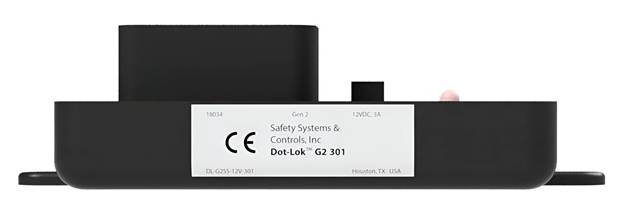
Industrial wheel spin often starts from the way power meets the transmission. Operators can create high-RPM torque spikes through pedal behaviour, especially with inching control. That is where DOT-LOK™ G2 matters.
DOT-LOK™ G2 focuses on shift discipline and controlled power application. It can help reduce the “wrong moment” events that lead to slip, jerk, and equipment stress. When you pair smarter shift control with traction-aware logic, you cut the chances of tire flare on slick dock approaches and dusty warehouse lanes.
We design these safeguards for real loading environments, not showroom test tracks. We build controls that respect productivity while still protecting equipment, floors, and people in motion.
A few practical outcomes you can expect when a site uses tighter shift and zone control logic:
- Fewer hard jolts when operators change direction under load
- Better consistency on ramps and dock plates
- Lower tire abuse from repeated wheel flare events
- Less chance of a sudden grip recovery that throws the vehicle off line
We also see facilities reduce minor impacts that never make the incident log but still cost money. Those small bumps break lights, chip racks, and chew tires. The right control layer prevents a lot of that.
Maintenance, Diagnostics, and When to Call a Professional
Wheel spin sometimes points to a system doing its job. Other times, it points to a fault that hides behind the same symptoms.
Check the basics first:
- Tire condition and pressure: worn edges, hardened rubber, or low pressure reduces grip fast.
- Tread contamination: oil, dust, and metal fines can glaze industrial tires.
- Wheel speed sensors: a weak sensor can misread and trigger false intervention.
- Brake health: traction logic often uses braking, so weak brakes weaken control.
- Alignment and steering: bad toe settings can scrub traction away before you accelerate.
Call a professional when you see repeated warning lights, inconsistent engagement, or intervention on dry surfaces. If the system activates during gentle starts on clean pavement, you likely have sensor drift, wiring issues, or mismatched tire sizes. Do not ignore it. A bad signal can cause over-correction and reduce control in the exact moment you need it.
Final Thoughts
Wheel spin feels simple, but the cause usually sits deeper than “slippery road.” Torque management, sensor accuracy, tire condition, and operator habits all stack together. A traction control system helps you move by limiting slip, not by adding grip out of thin air. If you run vehicles in loading docks and industrial lanes, the right control strategy protects equipment and keeps movement predictable.
If you want tighter control in high-risk zones, talk to us and order the right solution for your fleet, and we will help you set it up correctly.
FAQs
1) Why does my traction control light flash on dry pavement?
You likely have mismatched tires, a dirty wheel speed sensor, uneven tire wear, or a sensor wiring issue. The system reacts to bad speed data, not just to real slip.
2) Does traction control reduce engine power permanently?
No. It reduces torque only during detected slip events. Once traction stabilizes, it returns normal power.
3) Can worn tires make traction control feel “too aggressive”?
Yes. Worn or hardened tires slip sooner, so the system intervenes more often. New tires often make the vehicle feel calmer with fewer interventions.
4) How much does it cost to fix a wheel speed sensor problem?
Costs vary by vehicle and access, but diagnostics and replacement often cost less than tire and drivetrain damage from ignoring false slip signals.
5) Is traction control the same as stability control?
No. Traction control focuses on limiting wheel slip during acceleration. Stability control manages overall direction and yaw to keep the vehicle tracking where you steer. They often share sensors and work together.
